Finding the bee swarm simulator best pollen hive isn't about stacking the rarest bees you can afford — it's about matching your hive composition to your playstyle, your progress stage, and the fields you grind most often. The 2026 meta has shifted significantly with recent balancing patches, and players who stick to outdated builds are leaving millions of honey on the table every single run. Whether you're a free-to-play player grinding your first mythic bees or a veteran chasing endgame honey-per-hour records, this guide breaks down the strongest hive builds, their exact bee ratios, and the reasoning behind each pick so you can stop guessing and start converting pollen efficiently. your first mythic bees or a veteran chasing endgame honey-per-hour records, this guide breaks down the strongest hive builds, their exact bee ratios, and the reasoning behind each pick so you can stop guessing and start converting pollen efficiently—and if you’re weighing which legendary or mythic to prioritize before committing to a build, our Bee Swarm Simulator Tier List ranks every bee by combat and gathering value to help you spot the hidden gems that’ll outpace their rarity.
Why Your Hive Composition Determines Your Pollen Output
The relationship between bee types and pollen collection isn't random — every bee in your hive contributes through its ability triggers, passive bonuses, and gifted hive bonuses that stack multiplicatively. A hive with 45 random bees will always underperform a smaller, carefully curated hive because the hive bonus synergy between gifted bees creates exponential returns that raw bee count alone cannot match. According to community data from the r/BeeSwarmSimulator subreddit, players who reorganize their hives around a single color focus typically report 30-50% higher honey-per-hour within their first week of the switch, even without adding a single new bee.
The core principle is simple: pollen collection in Bee Swarm Simulator flows through three distinct phases — gathering pollen from fields, converting that pollen to honey in the hive, and then using that honey to fund better gear and more bees. Your hive composition directly impacts all three phases, but most players only optimize for the first one. The best pollen hive balances field capacity boosts, conversion rates, and ability uptime so that your bees spend less time idling and more time actively producing value.
The Three Pillars of a High-Performance Hive
Before we dive into specific builds, you need to understand the three mechanical pillars that every top-tier hive composition relies on:
-
Pollen Collection Multipliers — Bees like Fuzzy Bee and Buoyant Bee generate field-wide buffs that multiply every pollen token collected by your entire swarm, making them force-multipliers rather than just individual contributors.
-
Conversion Efficiency — Bees with Honey Hive passives or abilities like Precise Bee's targeting system convert pollen to honey faster, which matters because unconverted pollen is worthless if you get wiped by a mob before returning to base.
-
Ability Rotation Coverage — The best hives maintain near-constant uptime on their most powerful abilities by having multiple bees with the same trigger conditions, so you're never waiting 30 seconds for your next Melody or Focus proc.
Blue Hive Build: The Best Pollen Hive for Solo Players
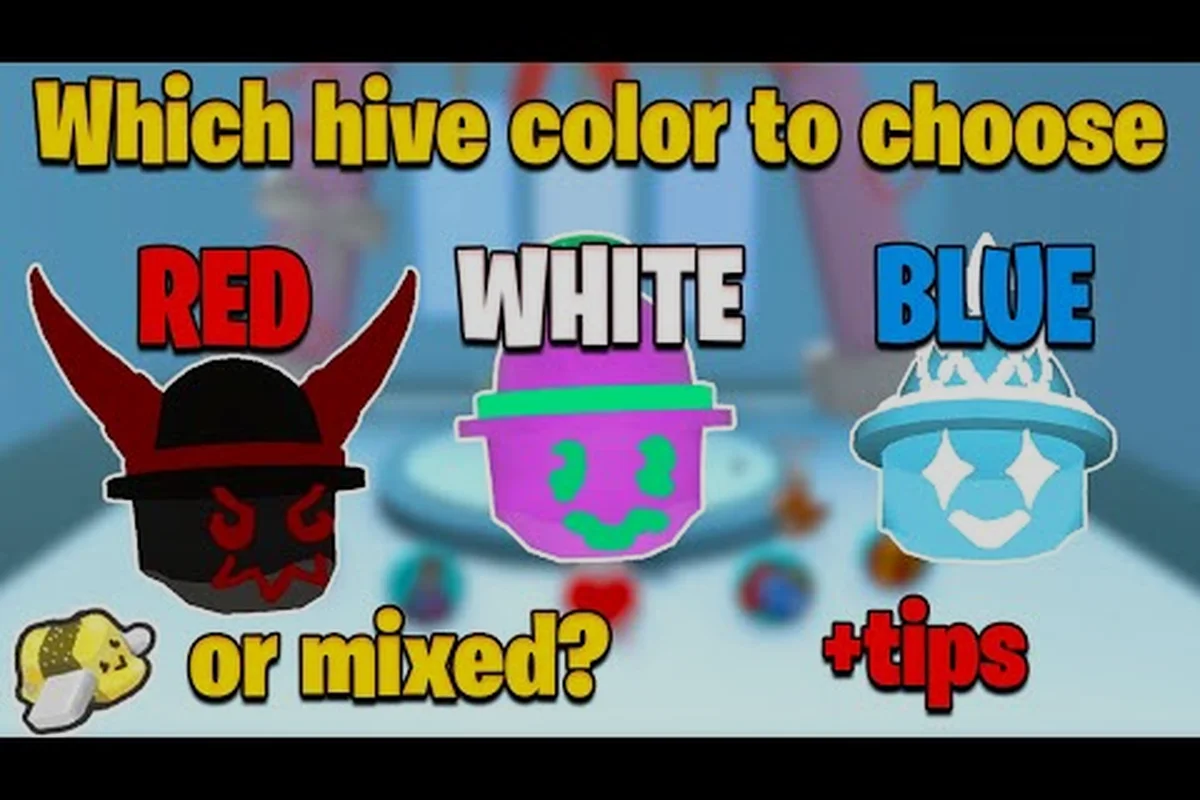
For solo players who grind fields without group support, the blue hive remains the most forgiving and consistent option in the 2026 meta. Blue hives rely on Tadpole Bee and Buoyant Bee as their core mythic duo, supported by a rotation of Frosty Bees, Bubble Bees, and Diamond Bees to maintain constant Bubble and Frost uptime. The blue build excels because its abilities generate pollen tokens that persist on the field, meaning even if your bees are converting, the tokens stack up for your next collection wave.
The key advantage of blue for solo play is self-sufficiency — blue abilities generate their own field boosts without requiring precise timing or coordination. According to player reports, a well-built blue hive can maintain 85-90% ability uptime during a full field run, compared to roughly 60-70% for red hives that depend on critical hit chains. This makes blue the best pollen hive for players who want consistent, predictable honey income without micromanaging every ability trigger.
| Bee Role | Recommended Bees | Primary Contribution |
|---|---|---|
| Core Mythics | 2-3 Tadpole, 2-3 Buoyant | Bubble generation, pollen token stacking |
| Support Mythics | 1-2 Fuzzy, 1 Precise | Field-wide pollen multipliers |
| Epic Fillers | 3-4 Frosty, 3-4 Bubble | Frost coverage, bubble chain extension |
| Rare Fillers | 2-3 Diamond, 2-3 Carpenter | Conversion speed, instant conversion |
| Gifted Core | 1 Gifted Tadpole, 1 Gifted Buoyant | Hive bonus: +15% pollen from blue fields |
Blue Hive Gifted Bonus Stacking
The real power of the blue build comes from its gifted hive bonuses. Each gifted Tadpole Bee adds +15% pollen from blue fields, and these stack multiplicatively with the Bubble Pollen buff from gifted Bubble Bees. A full blue hive with 8-10 gifted blue-type bees can reach 200%+ effective pollen collection in blue fields like Pine Tree Forest or the Coconut Field, which is why this build dominates solo honey farming.
For free-to-play players, the blue hive is also the most accessible endgame build because Tadpole Bees can be obtained through royal jelly rolls at a reasonable rate, and the supporting epic bees are common enough to gift through normal gameplay. You don't need event bees like Gummy Bee or Vicious Bee to make blue work, which keeps your honey free for gear upgrades instead of bee purchases.
Red Hive Build: Maximum Burst Damage for Group Play
If you play in groups or have access to Precise Bee and Spicy Bee in bulk, the red hive offers the highest theoretical pollen per second in the game — but it demands far more mechanical precision. Red hives revolve around critical hit chains, where each critical hit from a Precise Bee triggers a chain reaction that multiplies damage and pollen collection across your entire swarm. The Spicy Bee adds Flame tokens that stack additional burn damage, creating a feedback loop that can melt through even the toughest fields.
The tradeoff is fragility — red hives have significantly lower conversion rates than blue or white builds, meaning you'll need to return to base more frequently to convert your pollen. This makes red the best pollen hive for players who can time their Precise Bee ability activations perfectly and who have the Honey Mask or better gear to compensate for conversion losses. According to the Game Rant bees tier list, Precise Bee ranks among the top mythic bees for raw damage output, but its effectiveness drops sharply without proper support.
| Hive Slot | Red Build Composition | White Build Composition |
|---|---|---|
| Mythic Core | 3-4 Precise, 2-3 Spicy | 3-4 Fuzzy, 2-3 Gummy |
| Damage Support | 2 Vector, 2 Shy | 2 Vector, 2 Shy |
| Utility Fill | 2-3 Fire, 2-3 Rage | 2-3 Honey, 2-3 Music |
| Conversion | 2-3 Carpenter, 2 Diamond | 2-3 Carpenter, 2 Diamond |
| Gifted Priority | Gifted Precise, Gifted Spicy | Gifted Fuzzy, Gifted Gummy |
Maintaining Red Build Critical Chains
The red build's power depends entirely on maintaining critical hit chains — if your Precise Bees aren't triggering their abilities in sequence, your damage output collapses. Experienced players recommend running at least 4 Precise Bees so that their individual cooldowns overlap, creating a near-constant stream of critical hits. The Spicy Bee flame tokens add a secondary damage layer that scales with your Bee Attack stat, so red hives benefit disproportionately from attack-boosting gear like the Demon Mask.
One critical note for red hive players: field selection matters more than any other build. Red hives excel in red-dominant fields like the Rose Field or Strawberry Field, where the field boost from red pollen types amplifies your already-high damage output. Running a red hive in blue or white fields wastes your potential, so plan your grinding routes around red fields exclusively.
White Hive Build: The Versatile All-Rounder
The white hive, built around Fuzzy Bee and Gummy Bee, occupies the middle ground between blue's consistency and red's burst damage. White hives generate pollen tokens through Fuzzy Bee's fuzz bomb ability, which blankets the field in collectible pollen that persists for several seconds. Gummy Bee adds Gummy tokens that increase pollen collection speed and provide a conversion boost when you return to base, making white builds surprisingly efficient for both field grinding and boss fights.
What makes white the best pollen hive for hybrid players is its adaptability — white abilities work equally well in any field color, so you're not locked into a specific grinding route. This flexibility comes at the cost of peak performance; white hives rarely hit the same ceiling as specialized blue or red builds, but they also never fall below a solid baseline. For players who want to switch between solo grinding, group boss fights, and event farming without rebuilding their hive, white is the pragmatic choice.
White Hive Field Flexibility
The white build's field-agnostic design means you can chase whatever field boost is currently active without penalty. When the Pine Tree Forest has a x2 pollen event, you can grind there with your white hive and still perform at 80-90% of a dedicated blue hive's output. This flexibility makes white hives particularly valuable for free-to-play players who need to maximize every honey drop regardless of where they're grinding.
According to community testing, the white build also has the best honey-per-hour consistency across different play sessions because it doesn't depend on ability timing or critical hit luck. If you're the type of player who likes to multitask while grinding — watching videos, chatting with friends, or semi-afk farming — white hives punish inattention far less than red builds.
Free-to-Play Hive Build: Best Pollen Hive Without Mythic Bees
Not every player has the honey or luck to fill their hive with mythic bees, and that's okay — the free-to-play hive build can still produce respectable honey-per-hour numbers if you understand the right hive composition principles. The key insight is that gifted epic bees outperform non-gifted mythic bees in most scenarios because their hive bonuses provide passive, always-on benefits that raw ability power can't match.
The best free-to-play hive focuses on gifted common and rare bees that provide stacking hive bonuses. Gifted Brave Bees add +10% attack, Gifted Hasty Bees add +10% movement speed, and Gifted Cool Bees add +10% conversion rate — when you stack 10-15 of these bonuses, the cumulative effect rivals a single mythic bee's contribution. The free-to-play progression guide covers this approach in detail, but the core principle is that hive bonus density matters more than individual bee rarity.
| Bee Tier | Recommended Count | Key Hive Bonuses |
|---|---|---|
| Gifted Common | 10-12 | Attack, Speed, Conversion, Pollen |
| Gifted Rare | 8-10 | Field-specific pollen, Ability rate |
| Gifted Epic | 5-7 | Instant conversion, Token link |
| Event Bees | 2-3 | Tabby, Gummy, Vicious (if obtainable) |
| Mythic (if lucky) | 1-2 | Any mythic, prioritize Fuzzy or Tadpole |
Free-to-Play Progression Strategy
The free-to-play build isn't just a budget option — it's a stepping stone to full mythic hives. Start by gifting every common and rare bee in your hive, since royal jelly is cheap and gifted bonuses are permanent. As you accumulate honey, replace your weakest gifted commons with gifted epics, then gradually introduce mythic bees as you unlock them through royal jelly rolls or quest rewards.
The most important free-to-play tip is to never sell a gifted bee — even if it's a common bee you've outgrown, its hive bonus still contributes to your overall stats. According to player experience, maintaining a full hive of gifted bees of any rarity outperforms a half-gifted hive with a few mythic bees, because the hive bonus stacking from 40+ gifted bees creates a baseline that raw ability power can't overcome.
Hive Build Comparison: Which Setup Wins in 2026?
To help you decide which build matches your goals, here's a direct comparison of the three main hive archetypes across key performance metrics. This data is based on community testing and player reports from the 2026 meta, and individual results may vary based on your gear, amulets, and playstyle.
| Performance Metric | Blue Hive | Red Hive | White Hive |
|---|---|---|---|
| Solo Honey/Hour | High | Medium | High |
| Group Honey/Hour | Medium | Very High | Medium |
| Ability Uptime | 85-90% | 60-70% | 75-80% |
| Field Flexibility | Blue fields only | Red fields only | All fields |
| Free-to-Play Viability | Excellent | Poor | Good |
| Skill Requirement | Low | High | Medium |
| Conversion Efficiency | High | Low | Medium |
Choosing Based on Your Playstyle
Your choice between these builds should reflect how you actually play rather than what looks strongest on paper. If you're a solo player who grinds for 30-60 minute sessions, the blue hive gives you the most consistent honey-per-hour with the least mechanical overhead. If you play in coordinated groups and enjoy optimizing ability rotations, the red hive offers the highest ceiling — but only if you can execute its demanding playstyle.
For players who want to maximize honey while semi-afk, the white hive is the best pollen hive because its abilities generate passive pollen tokens that collect themselves. The honey-making guide covers additional optimization strategies that work across all hive builds, including field rotation schedules and boost timing.
Best Pollen Hive Build Guides
Frequently Asked Questions
What is the best pollen hive for beginners in Bee Swarm Simulator?
The best pollen hive for beginners is a mixed hive focused on gifted common and rare bees, since hive bonus stacking provides consistent returns without requiring rare mythic bees. Prioritize gifting every bee you own, then gradually replace weak commons with gifted epics. This approach builds a solid foundation that transitions smoothly into specialized blue or white builds later.
How many mythic bees should I have in my best pollen hive?
For most players, 8-12 mythic bees is the sweet spot in a 45-bee hive, with remaining slots filled by gifted epics for their hive bonuses. Running more than 12 mythics reduces performance since you lose passive bonuses like Tadpole's or Buoyant's field-specific boosts. Prioritize gifting mythics first—a gifted mythic provides both its ability and a powerful hive-wide buff.
Can I build the best pollen hive without spending Robux?
Yes, you can build a top-tier pollen hive without Robux. A free-to-play build using gifted event bees like Tabby Bee and Vicious Bee, combined with a blue field focus, reaches roughly 70-80% of a mythic hive's output. Prioritize hive bonus density over individual bee rarity.
How often should I change my hive composition in 2026?
Re-evaluate your hive every 2-4 weeks of active play, or immediately after unlocking a mythic bee like Fuzzy or Buoyant, or a major gear upgrade. Check community tier lists post-patch since the meta shifts. Avoid constant reshuffling—each swap costs royal jelly and disrupts gifted bonus stacking, hurting your pollen output.
What is the best hive composition for solo grinding?
For solo grinding, stick with the blue hive—3 Tadpole Bees, 3 Buoyant Bees, plus Frosty and Bubble Bees. Blue abilities generate persistent pollen tokens that don't need precise timing, unlike red's burst reliance on group boosts. Add a Gifted Fuzzy Bee to multiply all pollen collection for the best self-sufficient output.