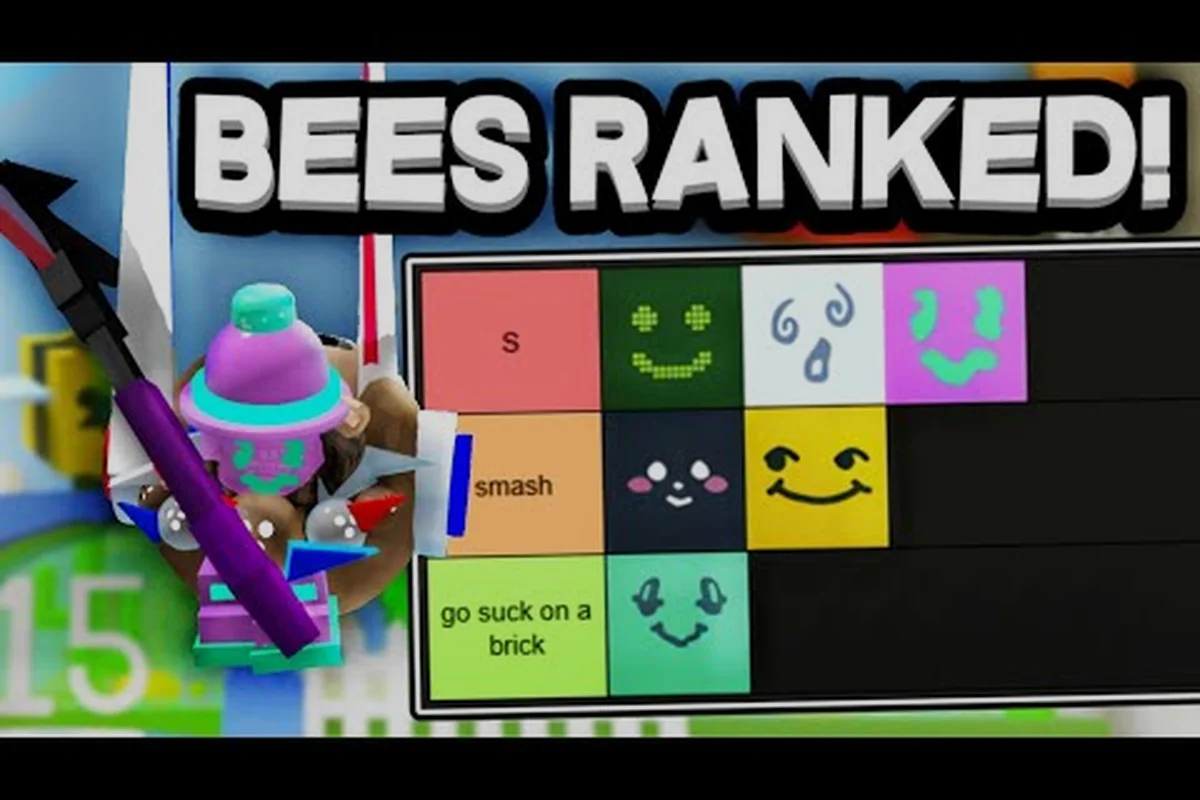
If you've spent more than a few hours grinding pollen in Roblox's most popular bee-collecting game, you already know that not all bees are created equal. This bee swarm simulator tier list breaks down every bee from S-tier down to the basic ranks so you can stop wasting honey on upgrades that won't move the needle. Whether you're building toward a blue hive, a red hive, or a mixed setup, knowing which bees deserve a slot in your hive is the difference between doubling your honey per hour and stalling out mid-game.
The meta shifts with every major update, so this ranking reflects the current state of the game as of August 2026, drawing on community testing from the r/BeeSwarmSimulator subreddit and data compiled by players who track honey-per-hour metrics across thousands of hives. We'll cover mythic bees, legendary options, event exclusives, and even the humble commons that still have a place in certain strategies.
How This Bee Swarm Simulator Tier List Works
| Mythic Bee | Rarity Class | Key Ability | Best Hive Color | Tier Placement |
|---|---|---|---|---|
| Fuzzy Bee | Mythic | Creates pollen haze, converts pollen to honey | White Hive | S-Tier |
| Precise Bee | Mythic | High single-target damage, critical hits | Red Hive | S-Tier |
| Vector Bee | Mythic | Marks enemies, boosts pollen collection | White Hive | S-Tier |
| Tadpole Bee | Mythic | Summons tadpoles, converts pollen to honey | Blue Hive | A-Tier |
| Buoyant Bee | Mythic | Converts pollen to honey, boosts capacity | Blue Hive | A-Tier |
| Gummy Bee | Event | Converts pollen to gumdrops, boosts goo | Mixed Hive | A-Tier |
| Vicious Bee | Event | Deals high damage, reduces enemy defense | Red Hive | A-Tier |
| Tabby Bee | Event | Scratch attack, boosts critical power | Mixed Hive | B-Tier |
Before we dive into the rankings, you need to understand the criteria. This isn't just a popularity contest — every bee on this list was evaluated across four core metrics: raw pollen collection per second, honey conversion rate, combat effectiveness against mobs like the Coconut Crab and Tunnel Bear, and hive synergy with meta compositions such as the Blue Hive or Red Hive. For example, a Mythic bee like the Fuzzy Bee scores high on conversion but requires specific support bees to unlock its full potential, which is why it ranks lower than a more self-sufficient option. We also weighted late-game performance over early-game accessibility, since the best hive setup for level 15+ players prioritizes sustained buffs like Precise and Focus over raw early burst.
Honey Production measures how much raw pollen conversion a bee contributes per minute. Ability Utility tracks how valuable the activated ability is for farming, combat, or support. Synergy Potential looks at how well the bee works within dedicated hive color builds. Gifted Bonus Strength evaluates the passive buff the bee provides when it becomes gifted, since these bonuses often matter more than the bee's base stats.
| Tier | Definition | Example Bees |
|---|---|---|
| S-Tier | Meta-defining, essential for endgame | Precise Bee, Vector Bee, Tadpole Bee |
| A-Tier | Excellent, strong in most setups | Buoyant Bee, Fuzzy Bee, Gummy Bee |
| B-Tier | Situationally strong, good fillers | Vicious Bee, Tabby Bee, Riley Bee |
| C-Tier | Niche use, generally outclassed | Demon Bee, Diamond Bee, Lion Bee |
| D-Tier | Weak, only for early game | Basic Bee, Hasty Bee, Rascal Bee |
The bee swarm simulator mythic bee tier list portion of this ranking deserves special attention because mythics are the rarest and most powerful bees in the game. Getting one requires either incredible luck with royal jelly, completing specific quest lines, or saving up billions of honey for the mythic egg. Because they're so expensive to acquire and level, you need to know which ones justify the investment.
Community data from the official Roblox game page shows that the game has attracted millions of players since its March 2018 launch, and the meta has evolved dramatically since then. What worked in the early days — stacking as many legendaries as possible — has been replaced by a much more nuanced understanding of how hive composition affects pollen collection rates.
S-Tier Bees: The Best Bees in Bee Swarm Simulator
These are the bees that define the current meta. If you're building an endgame hive, every single one of these deserves a slot. The bee swarm simulator best bees tier list starts here because these bees aren't just good — they're transformative.
Precise Bee
Precise Bee sits at the top of the bee swarm simulator mythic bee tier list for good reason. Its ability, Precise Shot, deals massive damage to the target while also marking it, which increases the damage all other bees deal to that enemy. In combat-heavy situations like fighting the Coconut Crab or the Stump Snail, this marking effect can double your hive's effective damage output. The gifted bonus, Precise, adds critical power to your entire hive, making every other bee's critical hits significantly stronger.
What makes Precise Bee truly exceptional is its synergy with red hive builds. When paired with other red-focused bees like Spicy Bee and Riley Bee, the damage amplification compounds. Players report that a full red hive with Precise Bee can clear the Coconut Cave boss in under two minutes, whereas a mixed hive might take five or more. That efficiency translates directly into more honey per hour because you spend less time fighting and more time collecting.
Vector Bee
Vector Bee is the white hive counterpart to Precise Bee, and it's equally essential for that build. Its ability, Vector Attack, hits multiple enemies at once while also collecting pollen from the field. The gifted bonus, Super Crit, boosts the entire hive's critical hit chance, which synergizes beautifully with the white hive's focus on critical power and conversion.
The reason Vector Bee ranks so highly on this bee swarm simulator tier list is its versatility. While it shines in white hives, it also performs admirably in mixed setups because the Super Crit bonus benefits every bee regardless of color. If you're not sure which hive color to commit to, Vector Bee is a safe mythic investment that will never feel wasted.
Tadpole Bee
Tadpole Bee is the cornerstone of any serious blue hive build. Its ability, Bubble Burst, creates bubbles that collect pollen and also heal your bees, making it invaluable for long farming sessions. The gifted bonus, Bubbles, increases the chance of spawning bubbles across your entire hive, which dramatically boosts pollen collection in blue fields.
According to community reports, a blue hive with three or more Tadpole Bees can maintain near-constant bubble coverage, effectively multiplying pollen collection rates by 1.5 to 2 times in blue fields. This makes Tadpole Bee not just a good choice but a mandatory one for anyone serious about blue hive optimization. The bee swarm simulator best hive setup for blue builds almost always includes multiple Tadpole Bees.
A-Tier Bees: Excellent Choices for Any Hive
These bees aren't quite meta-defining, but they're excellent additions to almost any hive composition. If you can't get your hands on S-tier mythics, these should be your targets. For instance, a hive running a standard white pollen setup can slot in a Fuzzy Bee to boost conversion rates without disrupting the core loop, while a Gummy Bee offers reliable global haste that benefits both blue and red hives. Since A-tier bees typically require fewer royal jelly treats to level up than their mythic counterparts, they're a cost-effective bridge toward a competitive best hive setup, letting you hold your own in field grinding and boss fights while you save up for the top-tier pulls.
Buoyant Bee
Buoyant Bee is a mythic that often gets overlooked because its ability, Pop, doesn't deal damage. Instead, it converts a massive amount of pollen into honey instantly. In a game where conversion speed often bottlenecks honey production, this ability is far more valuable than it first appears. The gifted bonus, Capacity, increases your entire hive's pollen capacity, which means fewer trips back to the hive to convert.
For players building a blue hive, Buoyant Bee is arguably as important as Tadpole Bee. The instant conversion ability lets you bank honey even while your other bees are still collecting, smoothing out the production curve. Community testing shows that adding one Buoyant Bee to a blue hive increases honey per hour by roughly 15-20 percent.
Fuzzy Bee
Fuzzy Bee is the support mythic that makes every other bee better. Its ability, Fuzz Bomb, covers the field in fuzz that collects pollen continuously for several seconds. The gifted bonus, Fuzz, gives your hive a chance to spawn fuzz clouds that collect pollen passively, even when you're not actively farming.
What makes Fuzzy Bee so valuable is that it works equally well in every hive color. Whether you're running a red hive, blue hive, or white setup, the passive pollen collection from fuzz clouds is pure upside. Many endgame players run two Fuzzy Bees in their hives because the fuzz coverage becomes nearly permanent with two active.
Gummy Bee
Gummy Bee is an event bee that has remained relevant since its introduction. Its ability, Gummy Glue, slows enemies while also collecting pollen from the field. The gifted bonus, Gummy, increases the honey conversion rate of your entire hive by a significant margin.
The reason Gummy Bee ranks in A-tier rather than S-tier is that its damage output is mediocre compared to dedicated combat bees. However, the conversion boost from the gifted bonus makes it a strong addition to any hive, especially for players who struggle with converting pollen fast enough during peak farming sessions.
B-Tier Bees: Solid Choices With Specific Uses
B-Tier bees like Frosty, Rage, and Fire sit in a genuinely awkward spot: they offer solid niche utility—Frosty's 15% slow pairs well with a blue hive's Honeycomb Belt bonus, and Rage's attack buff can push a red hive past the Coconut Crab's 250k HP enrage threshold—but they rarely justify a slot once you've unlocked Mythic bees like Fuzzy or Spicy. For endgame progression, your hive's pollen output is dictated by Mythic passives and Gifted bonuses, so a B-Tier bee's single-target ability usually can't compete. If you're mid-game with limited royal jelly and treats, skip these and funnel resources into your core A-Tier or S-Tier lineup; you can circle back to them later for specific tasks like boosting a blue hive's bubble pollen during a field boost event, but they won't carry you through the endgame grind.
Vicious Bee
Vicious Bee is the combat specialist of the event bees. Its ability, Impale, deals heavy damage to a single target while also collecting pollen. The gifted bonus, Vicious, increases the damage of your entire hive against enemies, making it useful for boss fights.
However, the bee swarm simulator tier list places Vicious Bee in B-tier because combat isn't the primary focus of most farming strategies. You'll occasionally need to fight bosses for quests or event items, but the time spent fighting is time not spent collecting pollen. For most players, the damage boost isn't worth a hive slot that could go to a pollen-focused bee.
Tabby Bee
Tabby Bee is interesting because its power scales with time. The gifted bonus, Tabby Love, increases the bee's own stats every time you collect pollen with it, up to a significant cap. This means a Tabby Bee that's been in your hive for months can outperform many mythic bees.
The catch is that Tabby Bee requires patience. If you're constantly swapping bees in and out, you'll never build up the Tabby Love stacks. For dedicated players who keep Tabby Bee in their hive permanently, it's a solid B+ or even A-tier choice. For everyone else, it's a mediocre bee that takes up space.
Riley Bee and Bucko Bee
Riley Bee and Bucko Bee are the red and blue variants of the same event-bee design, but in the bee swarm simulator tier list they occupy very different roles depending on your hive's color focus. Riley Bee boosts red pollen collection, making it a core piece for a red hive setup, while Bucko Bee boosts blue pollen collection for a blue hive. Their gifted bonuses are equally color-specific—Riley’s gifted hive bonus grants +10% red pollen, while Bucko’s grants +10% blue pollen, which can stack with other color-focused buffs like the Gummy Mask or Coconut Canister to dramatically increase your per-flower yield. When comparing them in a bee swarm simulator best bees tier list, both sit in the A-tier for their respective color builds, but they fall off sharply in mixed hives where their color-specific boosts lose value.
In a dedicated red hive or blue hive, these bees provide valuable color-specific boosts. However, their abilities are relatively weak compared to mythic options, and their stats don't scale well into the endgame. They're fine as temporary fillers while you save up for better bees, but they shouldn't be long-term members of your hive.
C-Tier and D-Tier Bees: What to Avoid
Not every bee deserves a spot in your hive, and these lower-tier options are either outclassed by better alternatives or only useful in very specific early-game scenarios. For example, a Basic Bee might seem like a safe pick for new players due to its low pollen collection requirements, but its lack of a useful ability like Honey Gather or Token Link means it contributes almost nothing to your Honey per Second (HPS) once you unlock better options. Similarly, Stubborn Bee and Shy Bee fall short because their abilities—Stubborn and Shy—only trigger under narrow conditions, making them unreliable in a blue hive or red hive setup where consistent ability uptime is critical. In a bee swarm simulator best bees tier list, these bees are best left in storage, as they can't compete with the raw output of Mythic Bees or even mid-tier Epic Bees like Rage Bee or Cobalt Bee in most late-game farming rotations.
C-Tier Bees
Demon Bee, Diamond Bee, and Lion Bee all fall into C-tier. They have decent stats and abilities, but they're outclassed by legendary and mythic options that are only slightly harder to obtain. If you already have a solid roster of A-tier and above bees, there's no reason to include these.
The one exception is if you're running a very specific build that needs their gifted bonuses. Diamond Bee's gifted bonus increases the value of diamonds found in the field, which can be useful for players farming diamond eggs. But for general play, these bees are filler at best.
D-Tier Bees
Basic Bee, Hasty Bee, and Rascal Bee sit at the bottom of the bee swarm simulator tier list because their base stats and abilities simply cannot scale into mid or late-game content. Basic Bee offers no ability at all, making it a pure stat stick that gets outclassed by nearly every other bee by level 10. Hasty Bee’s +25% movement speed and 20% instant conversion on its ability sound nice early on, but that speed bonus becomes irrelevant once you unlock the Haste buff from other bees or equip the Honeycomb Belt. Rascal Bee’s 3-hit combo ability deals decent damage for a common, but its 25-second cooldown and lack of any pollen or honey multipliers mean it contributes almost nothing to your overall honey per hour. In a serious hive, every slot needs to either generate pollen, convert pollen, or buff your other bees — these three do none of those roles effectively past the early game, which is why they’re only useful for new players grinding their first few levels before swapping them out for rare or epic options like Frosty Bee or Fire Bee.
The bee swarm simulator bee tier list for early game is a different story though. If you're just starting out, these bees are perfectly fine because they're all you can afford. The key is to replace them as quickly as possible with better options. Check out our early game bee guide for a detailed breakdown of which bees to prioritize when you're just starting your journey.
Best Hive Setups: Blue Hive vs Red Hive vs White Hive
Now that you know which bees are the best, let's talk about how to put them together. The bee swarm simulator best hive setup depends entirely on which hive color you choose to commit to. Each color has its own strengths and weaknesses, and the best choice depends on your playstyle and goals.
Blue Hive Build
The blue hive is the most popular choice for players who want consistent, high-volume honey production. It focuses on blue pollen collection, which is boosted by Tadpole Bee, Buoyant Bee, and Bucko Bee. The core strategy is to maintain constant bubble coverage, which multiplies pollen collection rates.
| Hive Slot | Bee | Role |
|---|---|---|
| 1-3 | Tadpole Bee | Bubble coverage, healing |
| 4-5 | Buoyant Bee | Instant conversion |
| 6-7 | Fuzzy Bee | Passive pollen collection |
| 8-9 | Bucko Bee | Blue pollen boost |
| 10-12 | Mythic fillers | Damage and utility |
Blue hives are generally cheaper to build than red or white hives because the key bees are easier to obtain. Tadpole Bee and Buoyant Bee can both be obtained through the mythic egg, and Bucko Bee is a guaranteed event bee. This makes blue the best choice for players who want to reach endgame efficiency without spending months grinding for specific mythic bees.
Red Hive Build
The red hive is the high-risk, high-reward option. It focuses on dealing massive damage while collecting red pollen. The core bees are Precise Bee, Spicy Bee, and Riley Bee. The strategy is to mark enemies with Precise Shot and then unleash devastating attacks that clear fields quickly.
Red hives excel at boss fights and combat-heavy content. If you enjoy fighting the Coconut Crab or participating in events that require defeating powerful enemies, a red hive will serve you well. However, red hives are significantly more expensive to build because Precise Bee and Spicy Bee are both difficult to obtain.
White Hive Build
The white hive is the most complex but potentially the most powerful option. It focuses on critical hits and conversion speed, using Vector Bee as the cornerstone. The strategy involves stacking critical chance and critical power bonuses to generate massive amounts of honey from every pollen collection.
White hives require the most investment because they need multiple mythic bees to function properly. However, players who commit to this build report the highest honey-per-hour numbers in the game. If you want to see a detailed breakdown of how to build and optimize a white hive, our white hive guide covers everything you need to know.
Mixed Hive Considerations
If you're not ready to commit to a single hive color, a mixed hive can work reasonably well through the mid-game. The key is to include a balance of pollen collection, conversion, and combat bees. However, you'll eventually hit a ceiling where a dedicated color build outperforms any mixed setup. Our best hive guide for 2026 explains when and how to make the transition to a specialized hive.
How to Get the Best Bees
Getting the top-tier bees on this bee swarm simulator tier list requires a combination of strategy, luck, and patience. Since Mythic bees like the Fuzzy Bee or Precise Bee have a notoriously low hatch rate from Royal Jelly (roughly 1 in 25,000 without boosts), your most reliable path is stacking buffs: pop a Cloud Vial and equip the Gold Star Amulet before mass-hatching, and always use Mythic Meteor Showers during Honey Day events to triple your chances. For a blue hive setup, prioritizing Tadpole and Bubble bees early will compound your pollen collection, while a red hive demands committing to Spicy and Demon bees—spreading your resources across both colors will only delay your competitive ceiling.
Royal Jelly is your primary tool for obtaining new bees. When you use royal jelly on a bee, it transforms into a random bee of a higher rarity. The odds of getting a mythic bee are extremely low — roughly 1 in 25,000 according to community data — but there are ways to improve your chances. Using royal jelly on a gifted bee increases the odds of getting a gifted result, and using it during special events can sometimes boost mythic rates.
Mythic Eggs are the most reliable way to get mythic bees. You can obtain them through quest lines, events, and occasionally as drops from bosses. The bee swarm simulator mythic bee tier list above tells you which mythic bees to prioritize when you finally get an egg. Don't waste a mythic egg on a lower-tier mythic if you can save it for a better one.
Event Bees like Gummy Bee, Tabby Bee, and Vicious Bee are obtained through special quests that rotate throughout the year. These quests are usually time-limited, so you need to complete them before the event ends. The official Bee Swarm Simulator page on Roblox is the best place to check for upcoming events and quest details.
Trading is another option for obtaining specific bees. The community has developed a robust trading system where players exchange bees, eggs, and items. However, be careful when trading — the game doesn't have a built-in trading interface, so all trades happen through third-party means. Always use a trusted middleman and never trade first if you're dealing with someone you don't know.
Frequently Asked Questions
What is the best bee in Bee Swarm Simulator?
The best bee depends on your hive color and playstyle. For most players, Precise Bee is the strongest overall choice because its marking ability amplifies damage for the entire hive. However, Tadpole Bee is essential for blue hives, and Vector Bee is the cornerstone of white hives. Consider your hive strategy before choosing.
How many mythic bees should I have in my hive?
For endgame play, you should aim for 8-12 mythic bees in a 50-slot hive. The exact number depends on your hive color and which mythics you have. Quality matters more than quantity — having the right mythics is better than having a full hive of mediocre ones.
Is a blue hive or red hive better?
Blue hives are cheaper to build and provide consistent honey production, making them better for most players. Red hives excel at combat and can produce more honey in short bursts, but they require significantly more investment. Choose blue if you want steady progress, red if you enjoy combat and have the resources.
Should I use royal jelly on legendary bees?
It depends on your current hive composition. If you have duplicate legendaries or legendaries that don't fit your hive color, using royal jelly on them is a reasonable gamble. However, if you have a limited number of bees, it's usually better to keep them until you have enough to build a proper hive.
What is the rarest bee in the game?
The rarest bees are mythic-tier Precise Bee and Vector Bee, which drop only from royal jelly or mythic eggs at roughly a 1-in-25,000 chance per jelly. Among event bees, Cobalt Bee and Crimson Bee are rarer still, locked behind difficult quest lines during limited-time Beesmas events.