
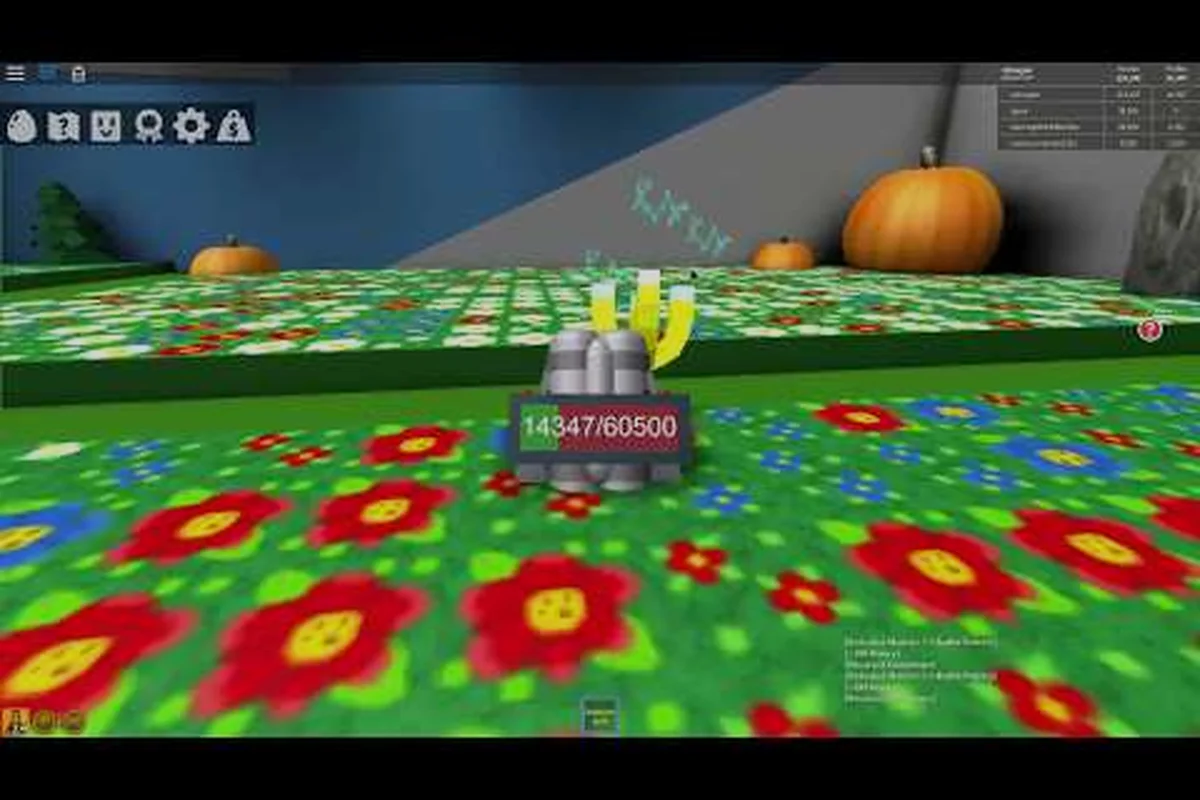
The bee swarm simulator pumpkin patch is one of the most overlooked mid-to-late game farming zones, sitting quietly between the Mountain Top Field and the Pepper Patch in the game's progression ladder. While many players rush past it on their way to the legendary red fields, the Pumpkin Patch offers a 1.25 million honey unlock cost that makes it surprisingly accessible for players who have just broken through the early game wall. This guide breaks down exactly what makes this field tick, how to maximize your pollen collection here, and when you should actually bother farming it instead of skipping straight to the Pepper Patch or Coconut Field.
Pumpkin Patch Position and Mid-Game Unlock Gate
The Pumpkin Patch sits on the eastern side of the mountain, tucked behind the Rose Field and accessible after you've proven yourself in the mid-game zones. To unlock this field, you need to spend 1.25 million honey at the field's gate, which places it in a sweet spot between the Mountain Top Field's 750,000 honey cost and the Pepper Patch's 7.5 million honey requirement. This makes it a natural stepping stone for players who are building their first serious red pollen economy.
The field itself is a wide, open area with pumpkin-themed decorations scattered throughout, and it's one of the few fields where the red pollen ratio feels genuinely rewarding for mid-game players. According to community data from the Bee Swarm Simulator subreddit, the field's base pollen multiplier sits at 1.5x, which is respectable but not exceptional when compared to the 2.5x multiplier found in the Mountain Top Field. However, the Pumpkin Patch compensates with a much higher red flower concentration, meaning red-hive players can sustain their collection loops without constantly rotating fields.
The field's location also matters for route optimization. Because it sits adjacent to the Rose Field and the Mountain Top Field, you can chain together a farming route that hits multiple red-pollen zones without wasting time on long travel distances. Players who have already mapped out their field progression order will find that the Pumpkin Patch slots naturally into a rotation that includes the Rose Field for quick token pickups and the Mountain Top Field for high-multiplier bursts.
What Makes the Pumpkin Patch Unique
Unlike the Pine Tree Forest, which offers a balanced mix of pollen colors, or the Coconut Field, which demands endgame gear and amulets, the Pumpkin Patch occupies a specific niche: it's the first field where red pollen farming becomes genuinely viable for players who haven't yet invested in the full red hive build. The field's token spawn rate is slightly above average, and the Pumpkin Patch field boost — a rare spawn that grants +50% pollen for 30 seconds — appears frequently enough to make active farming worthwhile.
The field also has a hidden mechanic that many players miss: the pumpkin sprouts that occasionally appear around the field's edges. These sprouts, when collected, grant a temporary +10% red pollen buff that stacks with other field boosts. Community testing suggests these sprouts spawn every 3-5 minutes, making them a reliable secondary income source for players who are actively monitoring the field rather than idling.
Pumpkin Patch vs. Other Mid-Game Fields
To understand where the Pumpkin Patch fits in the broader field hierarchy, it helps to compare it directly against the fields that surround it in the progression order. The table below breaks down the key stats for each relevant field, based on community-reported data and in-game testing:
| Field | Unlock Cost | Pollen Multiplier | Primary Pollen Color | Recommended Hive Level |
|---|---|---|---|---|
| Rose Field | 350,000 honey | 1.25x | Red | Level 7-8 |
| Mountain Top Field | 750,000 honey | 2.5x | Mixed | Level 8-9 |
| Pumpkin Patch | 1,250,000 honey | 1.5x | Red | Level 9-10 |
| Pine Tree Forest | 2,500,000 honey | 1.75x | White | Level 10-11 |
| Pepper Patch | 7,500,000 honey | 2.0x | Red | Level 12+ |
| Coconut Field | 25,000,000 honey | 3.0x | Mixed | Level 14+ |
The comparison reveals an interesting trade-off: the Pumpkin Patch has a lower multiplier than the Mountain Top Field, but its red pollen concentration means that red-hive players actually generate more usable honey per hour here. The Mountain Top Field's mixed pollen colors dilute your output if you're running a mono-color hive, whereas the Pumpkin Patch's consistent red pollen feeds directly into your hive's strengths.
That said, the bee swarm simulator pine tree forest offers a different value proposition entirely. With its white pollen focus and higher multiplier, the Pine Tree Forest becomes a better choice for white-hive players who have already invested in the right bee types. The Pumpkin Patch, by contrast, is the better pick for players who are still building their red hive and need a field that matches their current composition.
Boost Stacking in the Pumpkin Patch
The real potential of the Pumpkin Patch emerges when you combine its natural red pollen output with the game's boost system. A well-executed boost stack in this field can rival the honey-per-hour rates of the Pepper Patch, provided you time your boosts correctly. The optimal sequence, according to player reports, is:
-
Activate a field boost from the Field Boost Dispenser (costs 5,000 honey per use)
-
Pop a red pollen boost from your inventory (stacking up to 3x)
-
Trigger your hive's red pollen abilities (e.g., from Crimson Bee or Cobalt Bee)
-
Collect the Pumpkin Patch field boost token when it spawns
-
Use a super smoothie if you have one saved for this purpose
This sequence can push your effective multiplier to 8-10x for a 30-second window, which translates to roughly 1.5-2 million honey per boost cycle for a level 10 hive. The key is timing your boosts to align with the field boost token spawns, which occur every 60-90 seconds based on community observations.
Optimal Hive Composition for Pumpkin Patch Farming
| Pumpkin Patch Field | Pollen per Flower | Flower Capacity | Required Field Level | Recommended Bees |
|---|---|---|---|---|
| Pumpkin Patch (Base) | 12 | 25 | 1 | Basic, Brave, Hasty |
| Pumpkin Patch (Level 2) | 18 | 35 | 3 | Red Boost, Fire, Rage |
| Pumpkin Patch (Level 3) | 26 | 50 | 5 | Honey, Demon, Shy |
| Pumpkin Patch (Level 4) | 36 | 70 | 8 | Mythic (e.g., Fuzzy, Precise) |
| Pumpkin Patch (Level 5) | 48 | 95 | 12 | Endgame (e.g., Gummy, Spicy) |
Not every hive build benefits equally from the Pumpkin Patch, and understanding which bees to bring here can dramatically improve your honey output. The field's red pollen focus means that red-dominant hives perform best, but there are specific bee types that synergize particularly well with the field's mechanics.
The Crimson Bee is the obvious star of this field, thanks to its red pollen conversion abilities and its gifted hive bonus that increases red pollen collection by 20%. Pairing it with Shy Bee and Riley Bee creates a core trio that can sustain near-constant red pollen collection. For players who have access to mythic bees, the Precise Bee and Spicy Bee both offer significant advantages in this field, though they require higher levels to unlock their full potential.
| Bee Type | Role in Pumpkin Patch | Recommended Level |
|---|---|---|
| Crimson Bee | Primary red pollen collector | Level 10+ |
| Shy Bee | Token generation and conversion support | Level 9+ |
| Riley Bee | Red pollen boost and field buffs | Level 9+ |
| Precise Bee | Critical hit damage and red pollen conversion | Level 12+ |
| Spicy Bee | Fire damage and red pollen synergy | Level 12+ |
| Honey Bee | Honey conversion boost for all pollen | Level 10+ |
The table above shows a balanced approach that works for most mid-game players. If you're running a more specialized build, you can adjust the composition, but the core principle remains: prioritize red pollen collection and conversion above all else in this field. Players who are still deciding on their best early game bees should note that the Pumpkin Patch is where red-hive strategies start to pay off significantly.
Honey Mask Setup for the Pumpkin Patch
Your equipment choices matter just as much as your bee composition when farming the Pumpkin Patch. The Honey Mask remains the best all-around mask for this field because its conversion rate bonus applies to all pollen types, including red. However, if you're running a dedicated red hive, the Fire Mask offers a 15% red pollen boost that can outpace the Honey Mask's general benefits.
For your tool slot, the Spark Staff is the recommended choice for mid-game players because its red pollen collection bonus aligns perfectly with the field's output. The Dark Scythe becomes a better option at higher levels, but its material requirements make it impractical for players who are still working through the mid-game progression. Your boots and belt should focus on conversion rate and capacity rather than pollen-specific bonuses, since these stats benefit you regardless of which field you're farming.
Farming Routes and Efficiency Strategies
The Pumpkin Patch's location makes it an excellent anchor point for a farming route that maximizes your time and honey output. The most efficient route, based on community testing and player reports, starts at the Mountain Top Field for a quick boost token pickup, then moves to the Pumpkin Patch for the main farming session, and finishes at the Rose Field for any remaining red pollen needs.
This route works because it chains together three red-pollen zones without requiring long travel distances. The Mountain Top Field's high multiplier makes it worth a quick visit even if you're not farming there extensively, while the Rose Field's lower multiplier but faster token spawns provide a solid cleanup option. Players who have already unlocked the bee swarm simulator pepper patch can extend this route further, though the travel time between the Pumpkin Patch and the Pepper Patch makes it less efficient for shorter sessions.
Active vs. Idle Farming in the Pumpkin Patch
One of the most common questions about this field is whether it's better for active or idle farming. The answer depends on your hive level and equipment, but the general consensus among experienced players is that the Pumpkin Patch rewards active farming more than idle farming. The field's boost token spawns and pumpkin sprout mechanics require you to be present and collecting, which means idle setups miss out on a significant portion of the field's potential output.
For active farming, the optimal strategy is to maintain a collection loop that covers the field's main flower patches while keeping an eye on token spawns. A typical loop takes 60-90 seconds to complete, which aligns well with the field boost token's respawn timer. For idle farming, you're better off choosing a field with a higher base multiplier, such as the Mountain Top Field or the Pine Tree Forest, where the passive output compensates for the missed boost opportunities.
Advanced Pumpkin Patch Techniques
Once you've mastered the basics of farming the Pumpkin Patch, several advanced techniques can push your honey output even higher. The first is boost timing optimization, which involves tracking the field boost token's spawn pattern and planning your boost usage around it. Since the token spawns every 60-90 seconds, you can time your inventory boosts to overlap with the token's 30-second duration, effectively doubling the value of each boost.
The second technique is pumpkin sprout farming. These sprouts spawn every 3-5 minutes and grant a temporary red pollen buff, but they despawn after 60 seconds if not collected. Players who monitor the field closely can maintain a near-constant red pollen buff by collecting sprouts as soon as they appear. This requires active attention, but the payoff is a 10-15% increase in honey per hour compared to passive collection.
Finally, consider pairing the Pumpkin Patch with the bee swarm simulator rose field for a two-field rotation. The Rose Field's faster token spawns complement the Pumpkin Patch's higher multiplier, and alternating between the two keeps your boost uptime high while minimizing travel time. This strategy works particularly well for players who are still building their red hive and need consistent red pollen income.
When to Leave the Pumpkin Patch Behind
The Pumpkin Patch serves its purpose well, but there comes a point where you should move on to more profitable fields. Once your hive reaches level 12-13 and you've unlocked the Pepper Patch, the latter's higher multiplier and better token spawns make it the superior choice for red pollen farming. The Coconut Field, while requiring a significant investment, offers the best overall honey output in the game and becomes the endgame farming destination.
That said, the Pumpkin Patch remains useful even in the late game as a secondary farming zone for red pollen. If you're running a red hive and need to stock up on red extracts or complete red pollen quests, the Pumpkin Patch's accessibility and consistent output make it a reliable fallback. Players who are working through the complete field guide will find that this field earns its place in the rotation well into the endgame.
Frequently Asked Questions
What is the unlock cost for the Pumpkin Patch?
The Pumpkin Patch requires 1.25 million honey to unlock, placing it between the Mountain Top Field and the Pine Tree Forest in the progression order. You can access it after unlocking the Rose Field and reaching the eastern side of the mountain.
Is the Pumpkin Patch better than the Mountain Top Field?
For red-hive players, yes. While the Mountain Top Field has a higher base multiplier, the Pumpkin Patch's concentrated red pollen output feeds directly into red hive builds, resulting in more usable honey per hour. Mixed hives may still prefer the Mountain Top Field.
What bees work best in the Pumpkin Patch?
The Crimson Bee, Shy Bee, and Riley Bee form the core of an effective Pumpkin Patch loadout. Mythic bees like the Precise Bee and Spicy Bee offer significant advantages at higher levels, while the Honey Bee provides valuable conversion support for any hive composition.
Should I idle farm in the Pumpkin Patch?
Idle farming is less effective here than in fields with higher base multipliers. The Pumpkin Patch rewards active play through its boost token spawns and pumpkin sprout mechanics, so you'll get better results by actively collecting pollen and monitoring the field.
When should I stop using the Pumpkin Patch?
Once your hive reaches level 12-13 and you unlock the Pepper Patch, that field becomes the superior red pollen farming location. However, the Pumpkin Patch remains useful as a secondary farming zone for red pollen quests and extract grinding even in the late game.